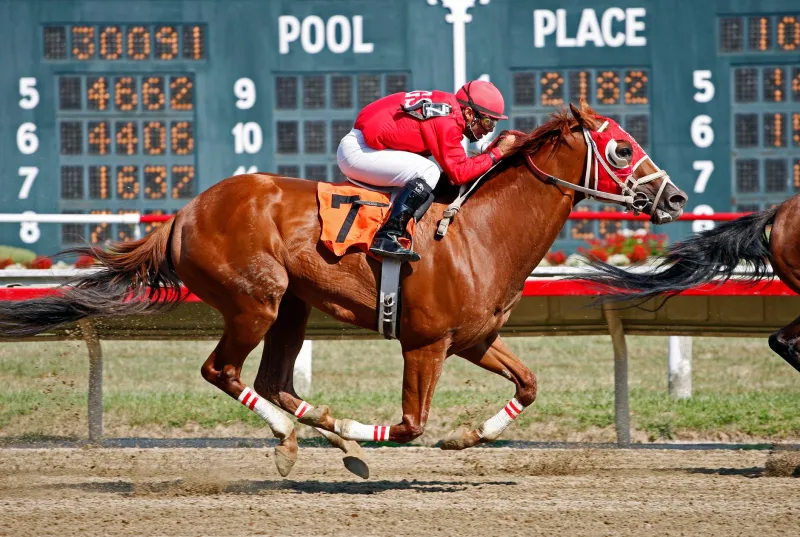
Riding High, Falling Hard: The Truth About Betting Streaks and Knowing When to Cash Out

There's nothing quite like a winning streak. Five winners from seven bets. Your multis landing. The footy tips coming in like clockwork. It feels like you've finally figured something out — like the game has revealed itself to you in a way it hasn't to everyone else.
Then it stops. And it usually stops hard.
If you've been punting for any serious length of time, you've lived this story. The question isn't whether your streak will end — it will, every single time — but whether you'll see the signs before the damage is done. Australia's most disciplined bettors don't just ride hot runs with confidence. They treat them with suspicion.
Here's why, and what you can actually do about it.
Why Your Brain Lies to You During a Hot Run
The psychological trap of a winning streak is well-documented, and it doesn't discriminate between casual punters and experienced ones. When you're winning, your brain starts connecting dots that may not actually be connected. You backed the Dogs last week because of a gut feeling about their travel schedule. They won. So now that gut feeling becomes a system.
This is called the illusion of control — the belief that your decisions caused the outcome, when variance was doing a lot of the heavy lifting. It's compounded by confirmation bias, where you start remembering the wins more vividly than the near-misses and quietly forgetting the bets that nearly went the other way.
The result? You start betting bigger. You expand into markets you don't know as well. You start chasing the feeling rather than the edge.
And that's exactly when the streak tends to snap.
The Statistics Nobody Wants to Hear
Here's the cold reality of variance in sports betting: even a punter with a genuine long-term edge of 5% above the market will experience extended losing runs. And by the same logic, a punter with no edge at all — someone betting randomly — will still string together impressive winning sequences from time to time.
A run of seven consecutive winners at even odds has roughly a 0.78% chance of occurring at random. That sounds rare, but across thousands of punters betting every weekend across NRL, AFL, racing and cricket, streaks like that are happening constantly, somewhere, to someone.
The dangerous question isn't am I on a streak? It's is this streak reflecting real edge, or am I just the lucky one this week?
Most punters can't honestly answer that question in the moment. The euphoria is too loud.
What Elite Australian Punters Actually Watch For
The bettors who consistently manage their bankrolls through both winning and losing periods tend to track a few specific signals that the average punter ignores.
Bet quality versus bet results. Did you win because you made a smart call, or did you win because a 70th-minute goal bailed you out? Keeping a simple record of your process score — how well-researched and justified each bet was — separate from your results score is one of the most underused tools in punting. If your results are outperforming your process, that's a yellow flag, not a green one.
Market movement alignment. During a genuine edge period, your picks tend to align with or slightly precede sharp market movement. If you're winning consistently but your selections are moving against you in the lead-up to games, your results may be variance-driven rather than insight-driven.
Stake creep. One of the clearest signs that a streak is warping your judgment is when your bet sizes start climbing without a corresponding increase in your overall bankroll percentage strategy. If you started the month betting 2% of your bankroll per bet and you're now at 4-5% because things are going well, the streak is already changing your behaviour in ways you haven't consciously decided.
The Regression to Mean Problem
In statistics, regression to the mean is the phenomenon where extreme results — both good and bad — tend to move back toward average over time. For punters, this is critical to understand because it means a hot streak carries within it the mathematical seeds of a correction.
The longer and hotter your streak, the more likely your next run of results will be below your average, simply because the numbers are rebalancing. This isn't bad luck. It's arithmetic.
The punters who get hurt most by this aren't the ones who were winning — it's the ones who scaled up their stakes during the winning run and are now absorbing bigger losses during the correction phase.
A Practical Framework for Streak Management
So how do you actually protect yourself without killing the enjoyment of a good run? Here are a few approaches worth building into your routine.
Set a streak checkpoint. Decide in advance that after five consecutive wins, you'll pause and review your last ten bets in detail. Not to stop betting — just to honestly assess whether your selections were genuinely strong or whether variance was your best mate.
Lock your stake sizing. Commit to a fixed percentage of your bankroll per bet and don't adjust it upward during a hot streak. If your bankroll grows, the absolute dollar amount naturally increases. That's enough. Chasing the feeling by inflating your unit size is how streaks become expensive.
Keep a brief post-bet journal. One or two sentences after each bet about why you placed it and how the result actually unfolded versus your expectations. Over time, this creates an honest record that cuts through the selective memory that winning streaks encourage.
Introduce a cooling period on multis. Multis are where streak confidence tends to do the most damage. When everything's landing, it's tempting to add legs and push the parlay. Consider a personal rule: no multi with more than four legs during a hot streak unless each selection meets the same standard you'd apply when you're on a losing run.
Knowing When to Actually Step Back
Sometimes the right move isn't adjusting your approach — it's genuinely stepping away for a few days. Not because you're losing, but because you're winning in a way that's starting to feel effortless.
Effortless betting is almost always a warning sign. The markets are not easy. The bookmakers are not giving money away. If it feels like you can't miss, your judgment is probably compromised — just in the opposite direction from how tilt usually works.
Taking a short break after a strong run isn't weakness. It's the kind of discipline that separates punters who build sustainable bankrolls from those who ride the wave up and crash back to zero.
The Bottom Line
A winning streak is a genuinely enjoyable part of betting — and you should allow yourself to appreciate it. But the smartest punters in Australia treat hot runs with the same analytical rigour they'd apply to a losing patch. They ask hard questions about why they're winning, they resist the urge to scale up recklessly, and they know that the streak ending isn't a failure — it's just the market correcting itself.
Bet smart enough to enjoy the run. Play bold enough to protect it.