Follow the Money: What Shifting Betting Lines Are Really Telling You
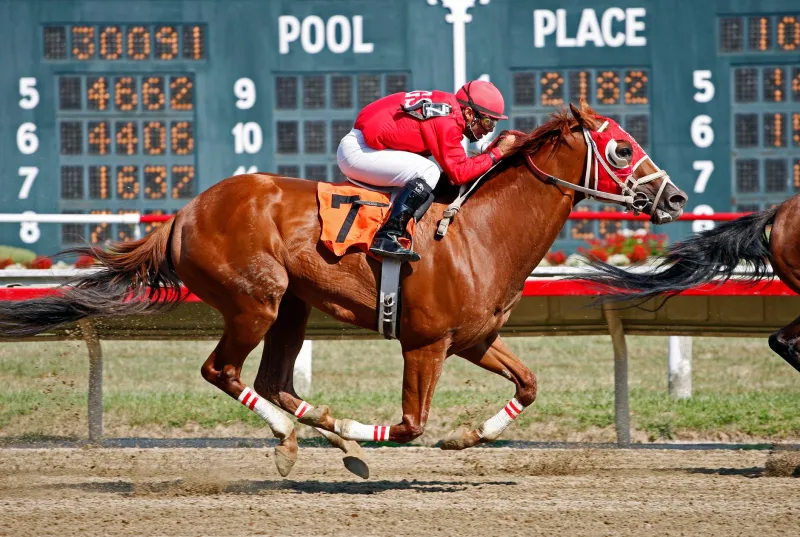
Most punters glance at the odds, place their bet, and move on. But spend five minutes watching a line move in the hours before a big NRL clash or a Group 1 race and you'll start to realise something: the market is constantly talking. The question is whether you know how to listen.
Odds movement is one of the most underrated tools in a punter's arsenal. It's not foolproof, and it's not magic — but understanding why lines shift can give you a serious edge over the recreational crowd. Let's break it down.
Why Do Odds Move in the First Place?
Bookmakers open a market with an initial line. That line is built on a combination of statistical modelling, historical data, and market positioning. Think of it as an educated starting point, not a definitive truth.
From the moment a market opens, money starts flowing in. When a significant amount of cash lands on one side, the bookmaker adjusts the odds to balance their exposure. That's the simple version. The more interesting version involves who is doing the betting — and that's where it gets genuinely useful.
There are two broad categories of bettors moving any market: the sharp money and the public money. Sharps are professional or semi-professional punters — syndicates, quants, and experienced individuals — who bet with an edge. Public money is the casual crowd, often driven by sentiment, media narratives, or loyalty to a team. Both move lines, but they move them differently, and learning to tell them apart is a genuine skill.
Steam Moves: When the Sharps Pile In
A steam move is a rapid, coordinated shift in a betting line triggered by sharp money hitting the market in a short window. You'll see a line move two, three, sometimes four points within minutes. It's not random.
In the NRL context, imagine a line opens with the Sydney Roosters as -4.5 favourites. Within an hour of opening, that line has blown out to -6.5 without any obvious public reason — no injury news, no weather update. That's almost certainly a steam move. Syndicates have identified value on the Roosters side and backed it hard enough to force the bookmaker's hand.
The smart response? Don't just blindly follow. Ask yourself: did you already think the Roosters were underpriced before the move? If yes, you may have missed your window. If the move has pushed the line past where you see value, it might actually be time to look at the other side.
Reverse Line Movement: The Counterintuitive Signal
Here's where it gets really interesting. Reverse line movement happens when the majority of bets are on one team, but the line moves in the opposite direction. This is one of the clearest signals that sharp money is active.
Say 70% of bets placed on an AFL game are on Collingwood, yet the line moves from Collingwood -3 to Collingwood -2. That means the books are deliberately shading the line away from where the public is betting. Why? Because a smaller number of high-value bets from sharp accounts went the other way — on the underdog — and the bookmaker respected that action enough to move accordingly.
In Australian markets, this pattern shows up regularly in AFL finals football and in the lead-up to feature race days like the Cox Plate or the Everest. Public money floods in on the glamour runners, and the line tightens — but sometimes the sharp money tells a completely different story.
Reading the Racing Markets
Horse racing adds another layer of complexity because the TAB and corporate bookmaker odds interact with the parimutuel pool in real time. A horse that opens at $6.00 and drifts to $8.00 in the lead-up to a race is almost certainly being opposed by informed money — sometimes the trainer's camp, sometimes a well-connected syndicate.
Conversely, a horse that firms from $10.00 to $5.50 in the final hour before the jump is attracting serious interest from somewhere. That doesn't always mean it'll win — but it means someone thinks it's a much better chance than the market originally suggested.
The drift and firm patterns in racing are arguably the most transparent form of line movement you'll find in Australian betting. The sheer volume of money and the speed at which it moves makes these shifts visible to anyone paying attention. Tools like live odds comparison and early market tracking apps are genuinely useful here.
Timing Your Entry Around Line Movement
One practical application of all this is simply knowing when to bet. For NRL and AFL, early market lines — opened days before game day — often contain the most value before the bookmakers refine their positions. Sharp money tends to hit early, pushing lines toward their "true" position. By game day, the line has usually been corrected.
If you like backing underdogs, getting on early before the public money floods in on the favourite can lock in a better price. If you're backing favourites, waiting to see whether the line shortens further might confirm your read — or warn you off if it starts drifting.
For racing, the 30-minute window before the jump is often the most informative. That's when stable money, last-minute scratchings, and track condition updates all hit the market simultaneously. Watching a horse firm hard in that window is a meaningful signal.
The Limits of Line Reading
It's worth being honest: line movement is a tool, not a crystal ball. Bookmakers are sophisticated operations. Sometimes they deliberately shade lines to attract action they want. Sometimes a big move is triggered by a single whale punter rather than a syndicate with a genuine edge. And sometimes lines move for reasons that are entirely mundane — a high-profile media tip, a social media post from a footy commentator, or simply a bookmaker recalibrating after a slow start to market.
The goal isn't to follow every line move blindly. It's to add line monitoring to your broader analytical toolkit. When a move aligns with your own research — when the sharp money and your own form analysis are pointing in the same direction — that's when it becomes genuinely powerful.
Build Your Own Monitoring Habit
You don't need expensive software or insider access to start tracking line movement. Most Australian bookmakers, including Unibet, display odds in real time. Checking a line when it opens and again 24 hours before game time takes two minutes. Keeping a simple spreadsheet of opening lines versus closing lines across your key markets will teach you more about how Australian betting markets behave than any single article can.
The punters who consistently find value aren't necessarily smarter than everyone else. They're just more observant. The market is always moving. The question is whether you're watching.